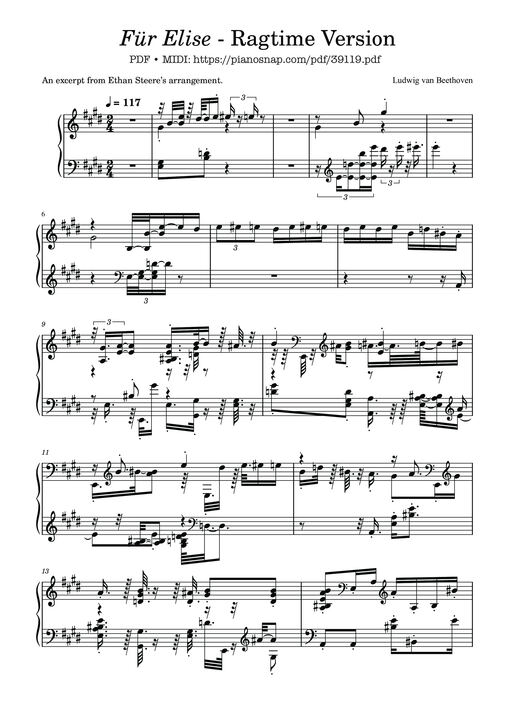
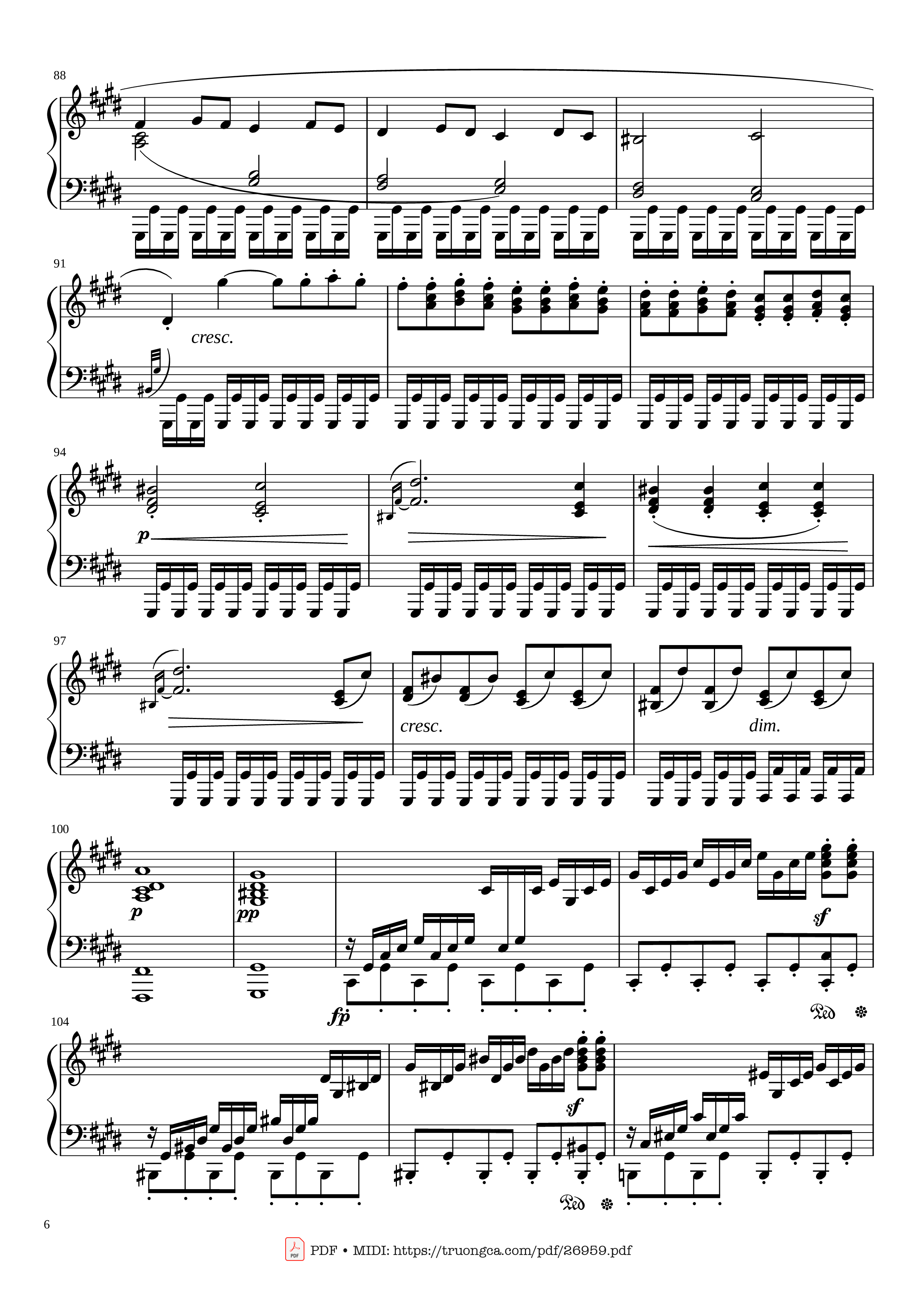
Sheet Sonate No. 14, Moonlight, 3rd Movement PDF, chords
Ludwig van Beethoven [PDF] [Sheet] [Lyrics] [Mp4/Midi]


Ludwig van Beethoven [PDF] [Sheet] [Lyrics] [Mp4/Midi]
2,900,000 views Last updated: 11/10/2026 Download SHEET PDF (12 pages)
Category 🎹 Piano, 🎹 Classical Piano, 🎹 Nhạc Piano cổ điển




More similar sheets PDF Sonate No. 14, Moonlight, 3rd Movement:
Ludwig van Beethoven (1770–1827)
Download and print in PDF or MIDI free sheet music for Sonate No.
Sonate No. 14, Moonlight, 3rd Movement
The final movement of Moonlight Sonata, composed by Ludwig van Beethoven, is a stormy and powerful piece in C♯ minor, written in sonata form. It is the most substantial of the sonata’s three movements, reflecting Beethoven’s innovative approach of placing the most important movement at the end. He also explored this idea in Op. 27, No. 1, and later in Op. 101.
The movement features rapid arpeggios, strongly accented notes, and intense musical energy. A successful performance requires lively expression, precise technique, and great agility.
Transposition is the process of moving a song's melody and chords up or down in pitch by a constant interval. The direction of the transposition tool is indicated by a plus (+) sign for up and a minus (-) sign for down. Hover mouse over chords signs to see the chords chart of Sonate No. 14, Moonlight, 3rd Movement song.
Truongca's Diagrams palette displays the name of a chord diagram for Guitar string when the cursor hovers over it, click on [guitar] to change the diagram into Ukulele or Piano.
The Videos/audios Sonate No. 14, Moonlight, 3rd Movement by Ludwig van Beethoven were embed from Youtube, Musescore or the other 3rd links. Videos are subject to 3rd's copyright control and may be removed by YouTube's copyright rules and 3rd's policies or maybe included advertisements. If you cannot access to these songs, this mean that have been removed.
Ludwig van Beethoven
Ludwig van Beethoven
Download and print in PDF or MIDI free sheet music for Sonate No.
Sonate No. 14, Moonlight, 3rd Movement
The final movement of Moonlight Sonata, composed by Ludwig van Beethoven, is a stormy and powerful piece in C♯ minor, written in sonata form. It is the most substantial of the sonata’s three movements, reflecting Beethoven’s innovative approach of placing the most important movement at the end. He also explored this idea in Op. 27, No. 1, and later in Op. 101.
The movement features rapid arpeggios, strongly accented notes, and intense musical energy. A successful performance requires lively expression, precise technique, and great agility.

Ludwig Van Beethoven • 6,000 views

Kudoshinichit • 5,000 views

Ludwig Van Beethoven • 3,600,000 views

Ludwig Van Beethoven • 291,300 views

Ludwig Van Beethoven • 153,700 views

Ludwig Van Beethoven • 6,000 views